


The Emergence of Underwater Drones in Marine Biology

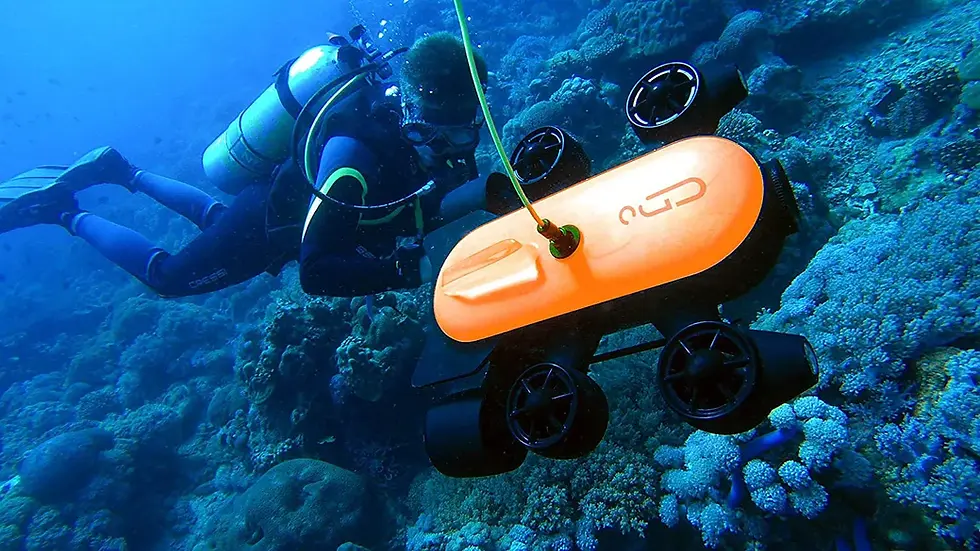
From Surface to Subsurface: The Wonders of Underwater Drones
These devices, called ROVs (Remotely Operated Vehicles) when tethered to ships, or AUVs (Autonomous Underwater Vehicles) when they roam freely, are revolutionizing marine science.
Outfitted with cameras, sonar, and environmental sensors (measuring temperature, salinity, pH, and more), underwater drones act as the eyes and ears of marine biologists. They can:
Map coral reefs with pinpoint accuracy
Survey fish populations across vast areas
Monitor water quality over time
Explore rugged or hazardous zones beyond diver reach
Companies like Blueye Robotics showcase how these drones are already being used for reef monitoring and habitat mapping in places too dangerous for divers to linger. Read about some of their work HERE!
As Blue Jobs explains, these tools extend human reach, collecting critical data in deep, dark, or hazardous waters while reducing risk. Read the article HERE!
Why Marine Biologists Are Embracing Drones
So, why the surge in interest? Underwater drones offer a combination of safety, efficiency, and innovation that traditional methods can’t match.
Safer and more cost-effective. Instead of expensive ship expeditions or risky deep dives, drones can perform tasks at a fraction of the cost.
Access to unreachable places. They slip into reef cracks, under overhangs, and down steep drop-offs, spots divers can’t easily access. Read more HERE!
Longer mission times. Some drones can remain submerged for hours, continuously recording data without fatigue
Precision and repeatability. By retracing the same paths over time, drones help scientists track ecosystem health with incredible consistency.
Non-invasive monitoring. They quietly observe marine life, capturing detailed data while minimizing human disturbance.
Take NOAA Fisheries, for example, they’re using underwater gliders to monitor ecosystems in remote waters. These gliders collect images of plankton and marine animals, helping researchers study population behavior across large areas.
And in a futuristic twist, researchers have even deployed swarms of small underwater robots to circle artificial reefs, tracking growth, fish movement, and ecosystem health nonstop.
Challenges Beneath the Surface
Of course, exploring the deep doesn’t come without hurdles.
Communication & navigation. Water blocks radio waves, so drones often rely on sonar, acoustic signals, or tethers.
Battery life. Running lights, sensors, and cameras underwater takes serious power, limiting endurance.
Pressure, corrosion, & biofouling. Deep-sea pressures can crush equipment, saltwater corrodes, and tiny organisms can cling to hulls, impacting performance.
High costs & complexity. Designing durable, precise underwater drones is harder, and pricier, than aerial ones.
Regulation. Protected marine zones often require permits for drone deployment.
Even with these challenges, the potential benefits, new discoveries, safer research, and better conservation, make underwater drones worth the effort.
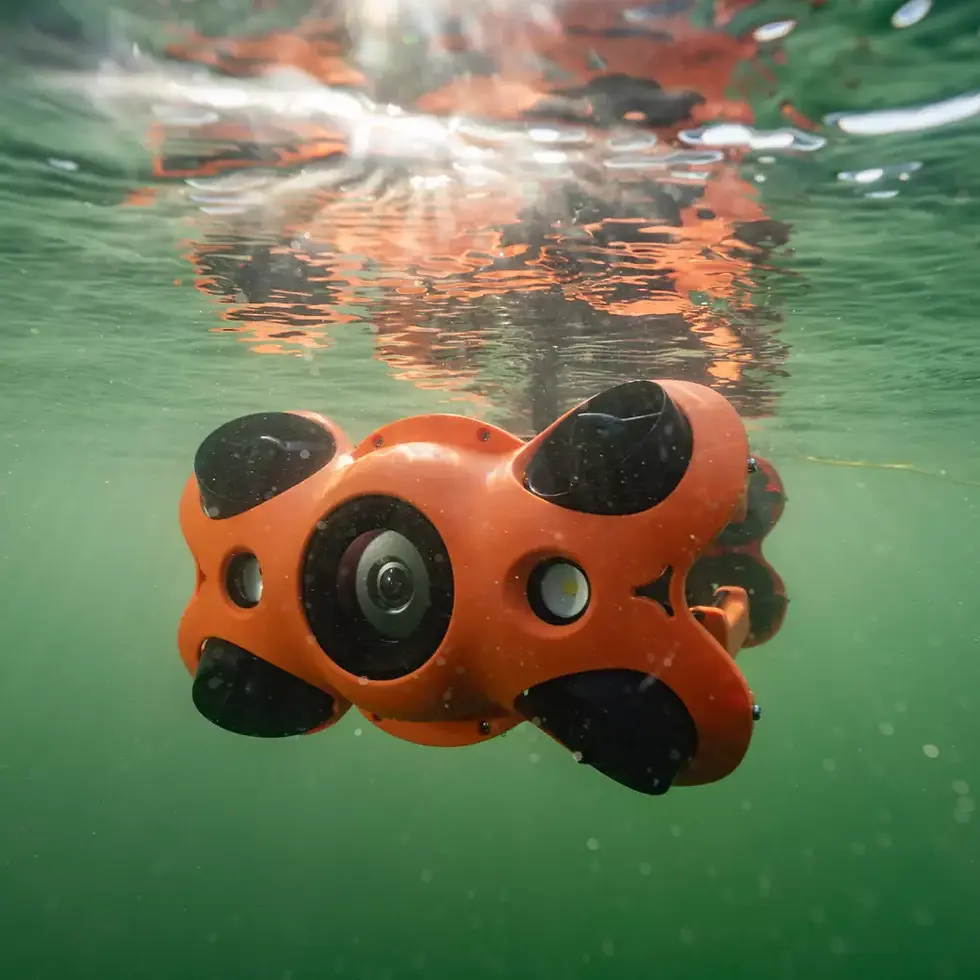
How Teslas Drones Envisions the Underwater Frontier
At Teslas Drones, we’re storytellers of the sky, but we believe those stories don’t end at the shoreline. Underwater drones are the next chapter.
We picture collaborations that pair aerial mapping (like orthomosaics) with underwater surveys, creating a full picture of coastal environments. Imagine synchronized missions where one drone soars overhead while another dives below, giving scientists and clients a complete above-and-below snapshot of our ecosystems.
For marine biologists, environmental groups, or coastal developers, this fusion of sky and sea data could be a game-changer, helping protect shorelines, monitor reef health, and preserve fragile habitats for generations.
Diving into the Future
The rise of underwater drones isn’t just exciting, it’s transformational. They’re not replacing divers or ships, but enhancing what marine science can achieve. From monitoring coral reefs to exploring the mysteries of the deep, these robots are giving us a new lens on the oceans that sustain us all.
This new frontier feels like a natural extension of what technology should be, responsible, imaginative, and deeply human. Whether from the skies or beneath the waves, drones are helping us see the world from new perspectives and tell stories that truly matter.


Comments